
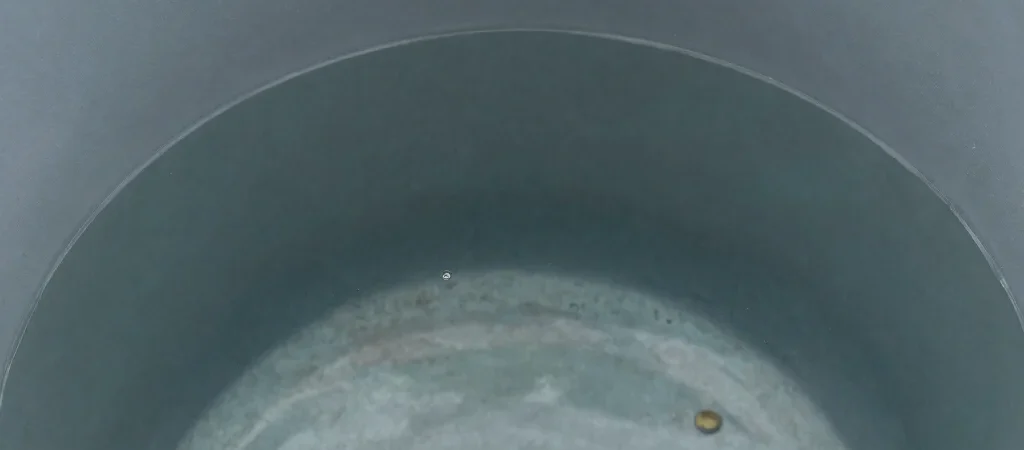
A cloudy glass or a layer of material at the bottom of a tank can raise an immediate question: is this algae, sediment, or something else? Appearance alone cannot reliably identify what is in the water. Still, careful observations can help you describe the issue and choose a sensible next step.
Light can encourage growth
Algae growth is more likely when light reaches water and conditions support it. Check whether the tank is opaque or shaded as intended, and look for cracks, uncovered hatches, or damaged covers that may admit light. Green or slimy-looking material is a reason to investigate, not proof of a specific health risk.
Sediment has several sources
Fine particles can settle during storage, enter with incoming water, or come from corrosion or disturbed material in plumbing. A deposit that appears after a repair or interruption may have a different explanation from one that builds up gradually. Note whether particles settle, whether the water is discolored at more than one tap, and when the change occurs.
Visible clues are not test results
Clear water is not a guarantee that it is free of contaminants, and cloudy water does not identify which contaminant might be present. Some water-quality concerns require appropriate testing to assess. If you have a private water source, consult your local health department or a qualified laboratory about tests suited to that source and your concerns.
Choose a measured response
Avoid adding household cleaners or improvised treatments to a tank; they may be unsafe or damage the system. Ask a qualified tank-cleaning professional what inspection or cleaning is appropriate for your tank type, and follow local public-health guidance. If the water has an unusual odor, color, or visible growth, use a safe alternative for drinking until you have reliable guidance.